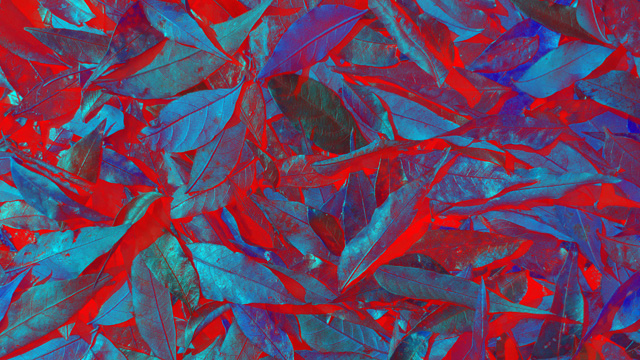

The 48 Symmetries
Most digital images are displayed on screens that use 3-dot pixels. Each pixel has one dot for each of the additive primary colours—red, green and blue. A dot can shine at a limited number of brightness levels. Each of the three dots can be set at any one of 256 levels: 0 (off), 1, 2, 3… 255 (full on) so we can think of each colour in an image as point inside a 256×256×256 cube with rgb axes instead of the usual xyz axes.
There are 24 ways to orient a cube if it’s to occupy a given space. Think of choosing which of the six square faces to put at the bottom, and then which of the four sides to put at the front; 6×4 = 24. This accounts for the 24 rotational symmetries of a cube. Now imagine that we could turn the cube inside out, like turning a right-hand glove inside out to make a left-hand glove. That way we could get the mirror image of each of the previous 24 orientations. This accounts for all 48 symmetries of the cube.
I designed a short computer program to program processed every pixel in an image of autumn leaves, treating each pixel as a point in the RGB cube to produce 48 distinct images. This video is a sequence of slow dissolves between these images.